Maritime Heritage: Khor Dubai and the Traditional Abra
Before Dubai developed modern highways, autonomous metro networks, and architectural landmarks, the city's commercial life centered on Khor Dubai (Dubai Creek). This natural seawater inlet extends approximately 14 kilometers inland from the Arabian Gulf, acting as the historical nucleus of the emirate. It provided a sheltered anchorage for fishing vessels, pearl divers, and wooden trading dhows that formed the foundation of regional commerce throughout the nineteenth and twentieth centuries.
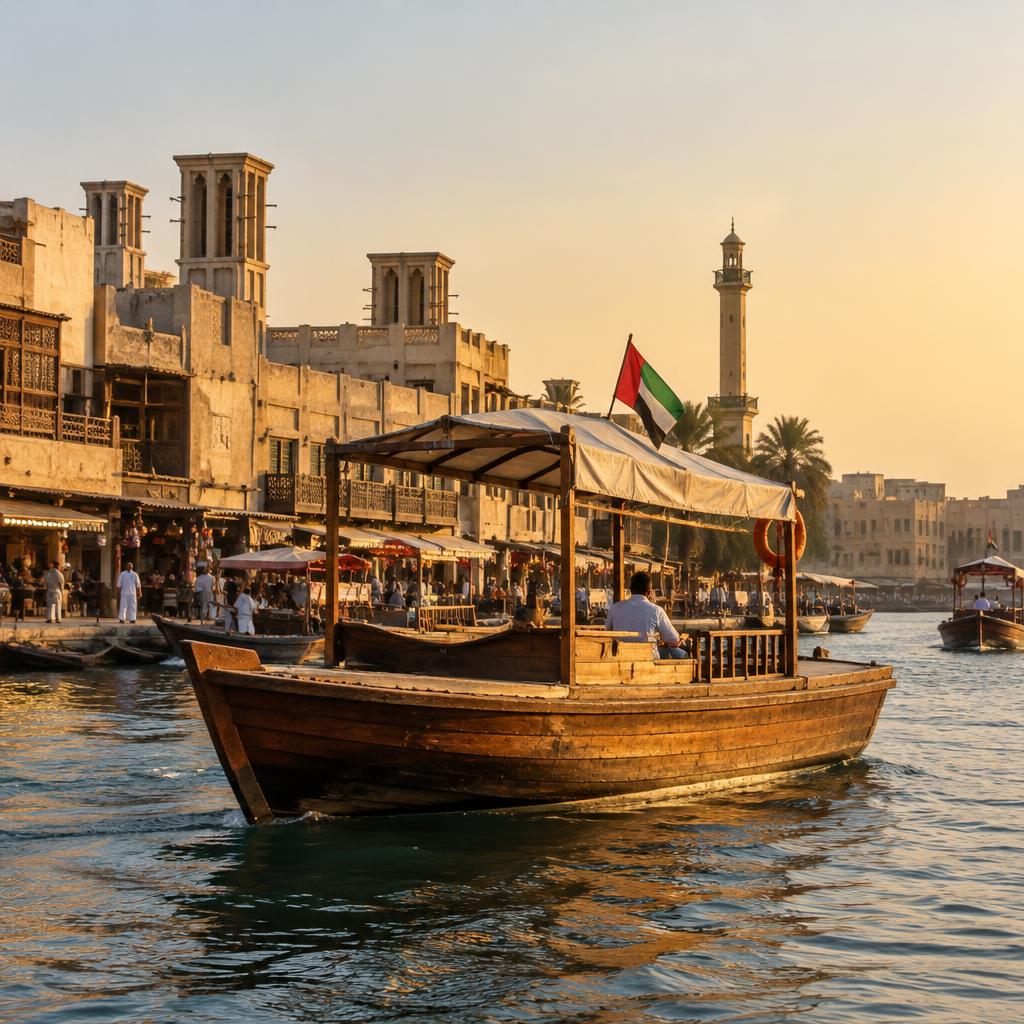
The abra—derived from the Arabic verb meaning to cross or traverse—is a traditional flat-bottomed wooden watercraft that has connected the two shores of the creek for generations. Prior to the opening of Al Maktoum Bridge in 1963, wooden abras provided the primary transit link connecting the commercial quarter of Deira on the eastern bank with the administrative and residential district of Bur Dubai on the western bank. Today, despite modern bridges and vehicular tunnels, the abra remains an authentic, living transport tradition connecting visitors directly to Dubai's trading origins.
Official RTA Abra Routes, Marine Stations, and Operating Hours
The traditional motorized abra network is regulated by the Dubai Roads and Transport Authority (RTA) Public Transport Agency. While the RTA also operates air-conditioned water buses, petrol abras, and electric water taxis elsewhere in the emirate, two traditional routes operate within the historic Dubai Creek basin:
Route CR1: Bur Dubai Abra Station ⇄ Deira Old Souq Abra Station. This is the primary route used by cultural travelers. It departs from the Bur Dubai marine dock (adjacent to the Bur Dubai Textile Souk and Al Fahidi Historical Neighbourhood) and arrives at Deira Old Souq Station, situated steps from the Deira Spice Souk and Gold Souk. Route CR1 runs daily from 6:00 AM until 12:00 Midnight.
Route CR2: Dubai Old Souq Abra Station ⇄ Al Sabkha Abra Station. This route links Dubai Old Souq Station on the Bur Dubai shore with Al Sabkha Station in Deira (near Baniyas Square and the wholesale trading lanes). Route CR2 operates continuously on a 24-hour daily schedule to serve commuters and local merchants around the clock.
Departure Frequency: There are no rigid timetabled departure slots. Boats depart continuously as soon as their passenger capacity (up to 20 passengers) is reached, resulting in departures every two to four minutes during daytime and evening peak hours.
| Route Code | Departure Dock | Destination Dock | Operating Hours | Fare per Passenger |
|---|
| Route CR1 | Bur Dubai Abra Station | Deira Old Souq Abra Station | 06:00 AM – 12:00 Midnight | AED 1 (Cash) |
| Route CR2 | Dubai Old Souq Station | Al Sabkha Abra Station | 24 Hours Daily (Continuous) | AED 1 (Cash) |
| Private Charter | Any Traditional Station | Custom Creek Route | On-demand at docks | AED 60 (30m) / AED 120 (1h) |
Fares, Payment Protocol, and Boarding Etiquette
The 1-Dirham Cash Fare: The fare for crossing Dubai Creek on a traditional motorized abra is exactly 1 United Arab Emirates Dirham (AED 1) per passenger per one-way trip. This fixed tariff makes the abra one of the most accessible cultural transport experiences anywhere in the world.
Payment Protocol: Payment is cash only. Unlike the Dubai Metro, RTA city buses, or the Dubai Tram, traditional motorized abras do not accept the contactless RTA Nol card. Passengers should carry 1 AED coins or small 5 AED banknotes. Cash is handed directly to the boat driver either upon stepping aboard or as the boat casts off from the wooden mooring pilings. If you present a 5 or 10 AED bill, the driver will return your exact change across the passenger bench.
Boarding Etiquette: Abras do not feature assigned seating. When directed by dock staff, step carefully down onto the wooden gunwale and take a seat on the central wooden bench. Passengers sit back-to-back facing outwards towards the open creek waters, keeping feet and bags clear of the perimeter deck so others may pass.
Understanding Abra Variants: Traditional vs. Air-Conditioned vs. Electric
Travelers should distinguish the classic motorized wooden abra from other marine craft operated across Dubai by the RTA:
Traditional Motorized Abras: The iconic open-air wooden craft described in this guide operating on Routes CR1 and CR2. Capacity is up to 20 passengers; fare is AED 1 cash only.
Air-Conditioned Abras: Modernized enclosed vessels featuring glass panoramic windows and climate control. These operate on commuter routes such as Route BM2 between Al Jaddaf Marine Station and Dubai Festival City. Air-conditioned abras require an electronic RTA Nol card and have a standard fare of AED 2.
Electric Abras: Eco-friendly battery-powered boats used primarily for leisure sightseeing, such as tourist cruises on Burj Lake in Downtown Dubai (overlooking the Dubai Fountain) and seasonal rides along the waterways of Global Village.
Private Abra Charters: Affordable Creek Sightseeing
For visitors seeking family exclusivity, unhurried photography, or a scenic tour along the creek, traditional abras can be chartered privately under official RTA fixed rates.
Official Charter Tariffs: The government-regulated rate for hiring a private traditional motorized abra is AED 60 for 30 minutes, or AED 120 for 1 full hour. Payment is made in cash directly to the driver.
How to Arrange a Charter: Approach an abra driver at the Bur Dubai or Deira Old Souq stations and indicate that you wish to hire the boat for a private cruise ('charter' or 'khususi'). Confirm the duration (30 or 60 minutes) before departure. A 60-minute charter allows the driver to navigate up towards Al Maktoum Bridge and back down toward Al Shindagha, providing clear views of loading cargo dhows, heritage wind towers, minarets, and modern glass bank headquarters.
Vessel Construction and the Creek Sensory Experience
Vessel Construction: Traditional abras are constructed from durable hardwoods and teak, measuring approximately 10 meters in length with a broad beam that provides buoyancy and stability in tidal creek currents. A central inboard diesel engine sits covered in the center of the hull, producing the gentle rhythmic chug that has characterized the creek for decades.
Sensory Experience: Stepping aboard offers an immediate sensory transition. As the abra navigates away from the quay, the cooling marine breeze contrasts with the warmth of the souks. The boat passes alongside historic wooden dhows hand-loaded with consumer goods, spices, and textiles bound for regional ports. The low vantage point places passengers near the water's surface, offering wide vistas of historic wind towers (barajeel) rising above Bur Dubai alongside the modern skyline of Deira.
Connecting Historic Souks: Bur Dubai and Deira Walking Routes
The abra crossing serves as the direct walking connection between Dubai's most notable heritage shopping quarters:
Bur Dubai (Western Bank): Disembarking at Bur Dubai Abra Station brings you directly into the Bur Dubai Textile Souk, known for rolls of silk, pashminas, and tailored garments. A 5-minute walk westward leads into the Al Fahidi Historical Neighbourhood, featuring restored coral-stone wind tower buildings, art galleries, and the Arabian Tea House. Continuing further along the waterfront path leads to Al Shindagha Museum and the historical residence of Sheikh Saeed Al Maktoum.
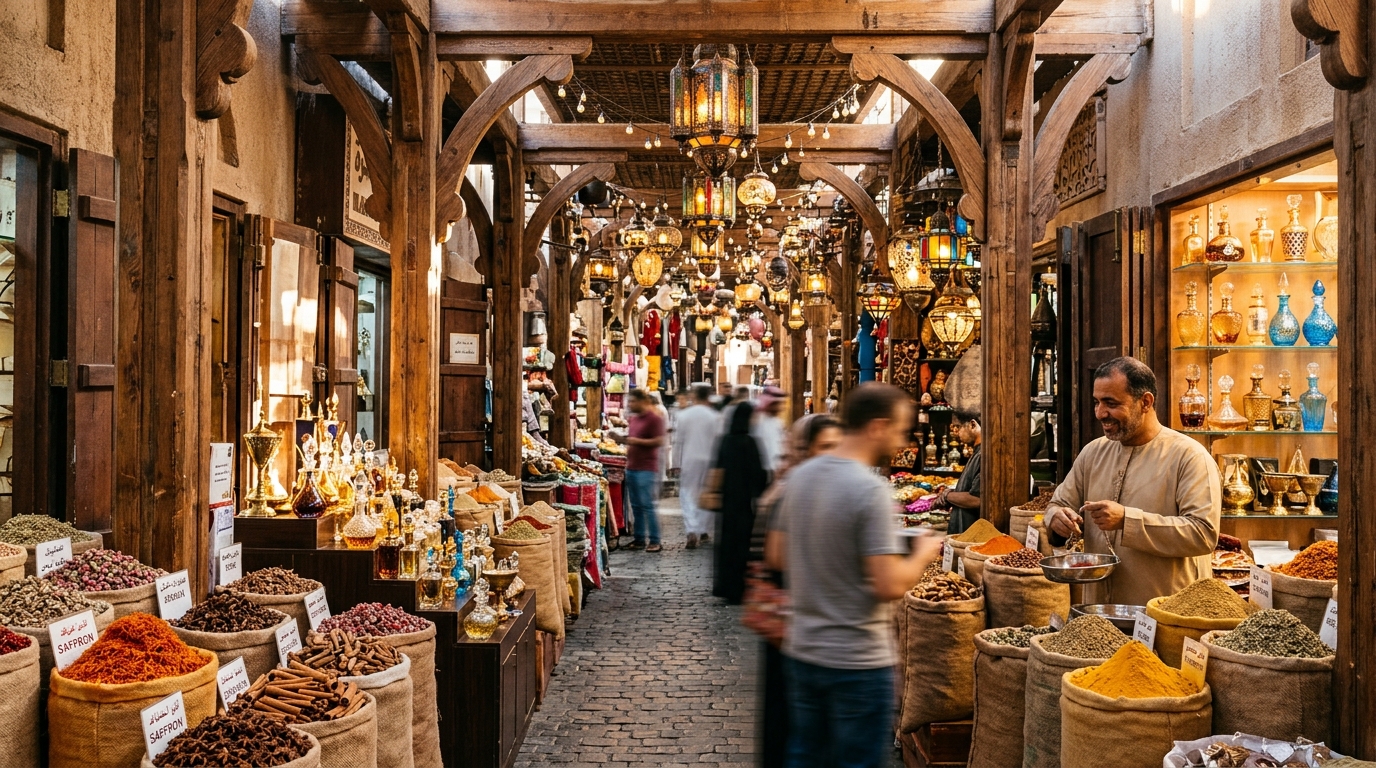
Deira (Eastern Bank): Disembarking at Deira Old Souq Abra Station leads directly into the alleys of the Deira Spice Souk, stocked with sacks of saffron, dried limes, cardamom, frankincense, and herbal teas. Walking two blocks north along pedestrian pathways leads to the Deira Gold Souk, home to hundreds of licensed jewelry retailers displaying gold ornaments in certified carats.
Safety Standards, Accessibility, and Weather Advice
Safety Regulations: Every RTA-registered abra carries emergency life jackets stored under passenger benches or in overhead racks. RTA marine inspectors regularly inspect hulls, engines, and driver permits. In instances of heavy coastal fog or squalls, the RTA temporarily pauses abra crossings until safe visibility returns.
Accessibility: Because traditional abras feature wooden gunwales and floating pontoon boarding planks, boarding requires taking one or two steps down into the hull. Crew and dock attendants assist passengers with footing. While traditional abras cannot accommodate motorized wheelchairs, foldable manual wheelchairs and lightweight baby strollers can be brought aboard with driver assistance.
Photography Advice: The most favorable lighting for creek photography occurs in early morning (7:00 AM to 9:00 AM), when water traffic is light and soft sunlight illuminates the Deira waterfront, and late afternoon (4:45 PM to 6:00 PM), when the setting sun highlights the creek waters.
Curated 3-Hour Old Dubai Walking and Abra Itinerary
To explore Old Dubai efficiently, consider this 3-hour self-guided walking route:
Hour 1 (Bur Dubai Heritage): Start at Al Fahidi Historical Neighbourhood. Walk through the pedestrian alleyways, observe traditional wind tower architecture, and pause for mint tea at a courtyard cafe.
Hour 2 (Textile Souk & Crossing): Walk through the covered Bur Dubai Textile Souk toward the waterfront. Pay your 1 AED cash fare, board a traditional wooden abra at Bur Dubai Abra Station, and enjoy the five-minute crossing across Khor Dubai.
Hour 3 (Deira Spice & Gold Souks): Disembark at Deira Old Souq Station. Explore the aromas of the Spice Souk, then walk through to the Deira Gold Souk before departing via Al Ras Metro Station (Green Line) or taking a return abra back to Bur Dubai.