What an Evening Desert Safari Involves
The evening desert safari stands as Dubai's quintessential outdoor excursion, providing international travelers an authentic bridge between high-adrenaline motorsport and centuries-old Bedouin hospitality. Operating daily throughout the year, the experience departs from urban Dubai during the mid-afternoon, journeying eastward into the sweeping red dunes of the Arabian Desert before settling into an illuminated desert majlis camp as twilight descends.
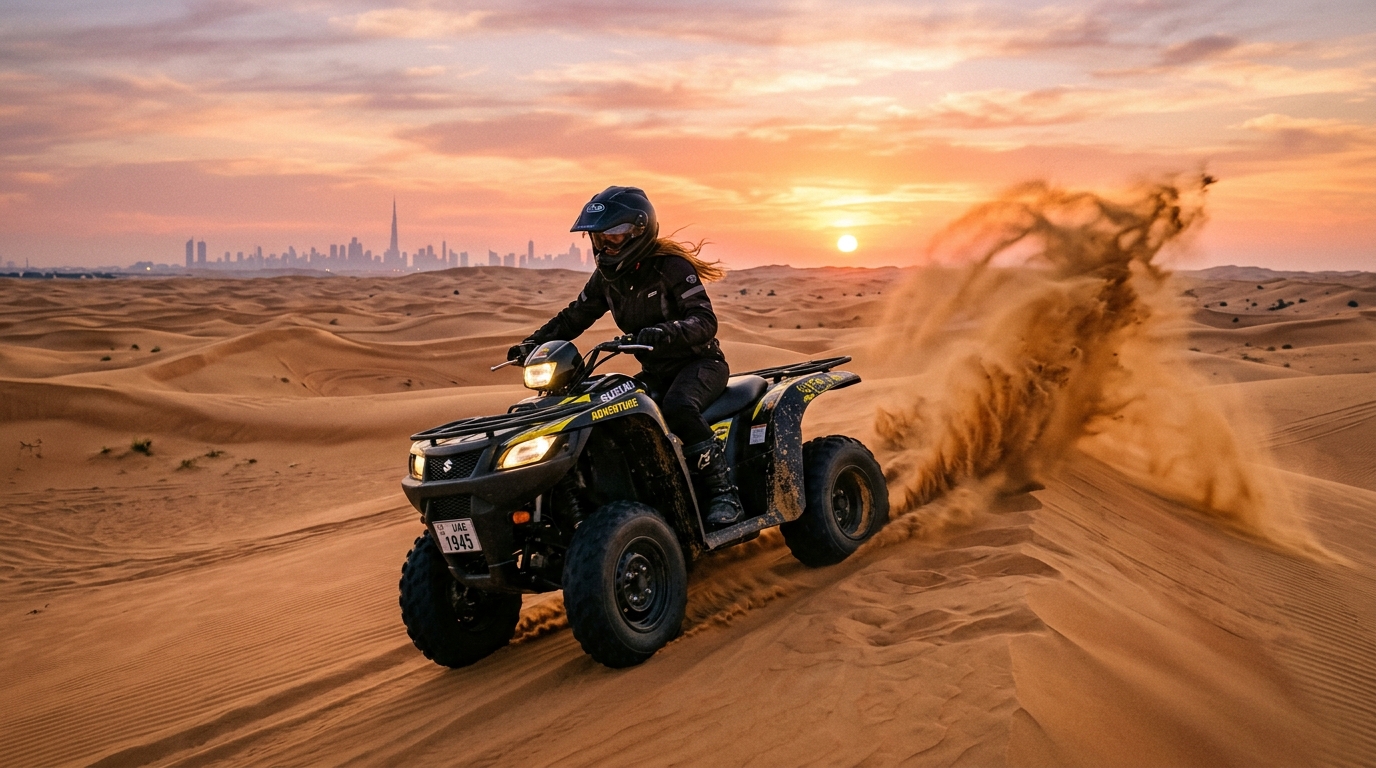
Unlike self-contained activities such as standalone quad biking or isolated dune driving, an evening safari is structured as a multi-stage journey. Guests experience the transition of the desert landscape from the intense daytime sunlight to the golden hour of sunset, followed by a cool desert night illuminated by lanterns, open hearths, and clear starlight.
Distinct From Standalone Dune Bashing
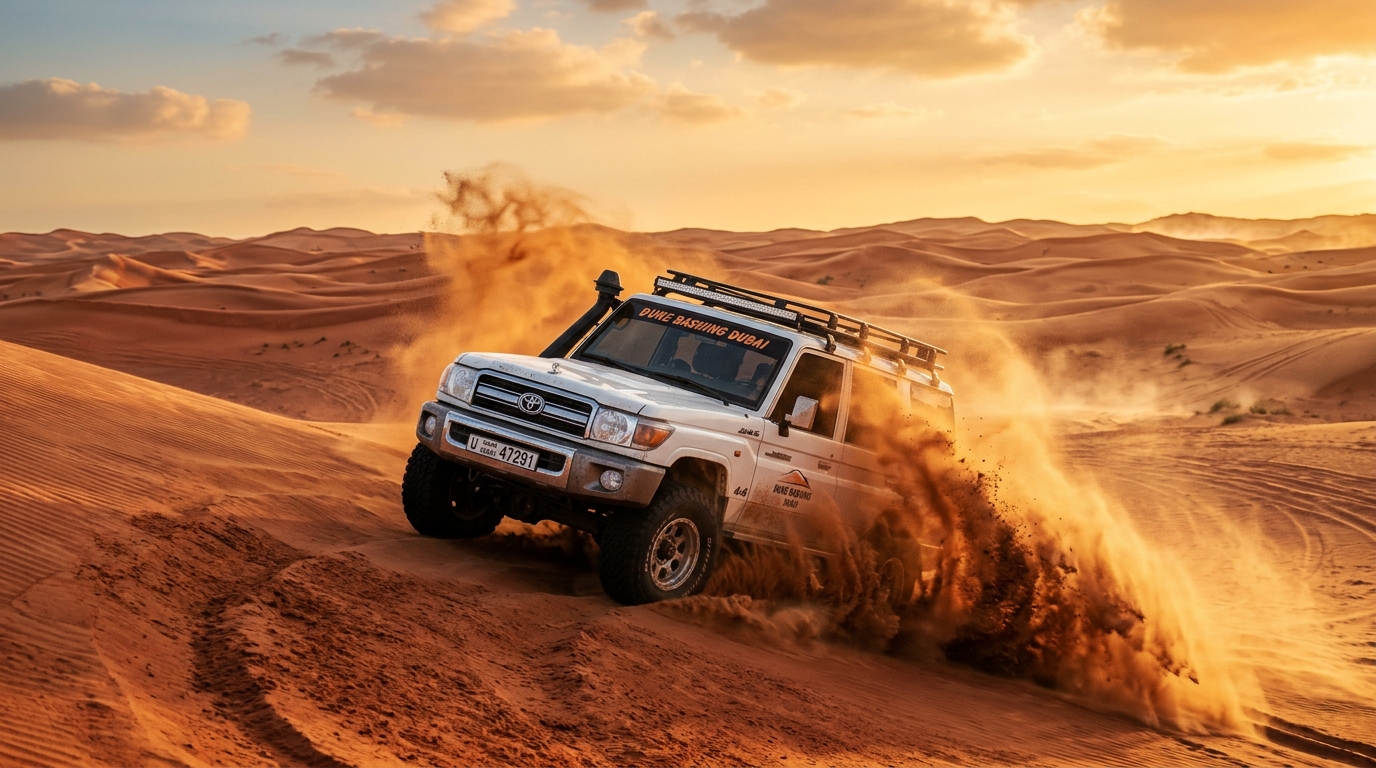
While 4x4 dune bashing is an exciting component of the afternoon itinerary, the evening safari encompasses round-trip transfers, camp cultural activities, dining, and live performances, making it a complete hospitality experience.
The Desert Landscape: Lahbab Crimson Dunes
Most commercial evening desert safaris operate in the Lahbab region, located approximately 50 kilometers southeast of central Dubai along the Dubai-Hatta Road (E44). Lahbab is internationally celebrated for its towering crimson sand dunes, characterized by rich iron-oxide pigmentation and steep slip faces reaching heights of over 30 meters.
This high-dune terrain provides the expansive elevation shifts required for dynamic vehicle navigation and sandboarding. It is distinctly separate from the Dubai Desert Conservation Reserve (DDCR), an environmentally protected sanctuary where recreational freestyle dune driving is legally prohibited to preserve indigenous wildlife such as the Arabian Oryx and vulnerable desert flora. Commercial safaris in Lahbab take place within designated off-road adventure zones that do not disrupt protected nature reserves.
Vehicle Safety and Regulatory Standards
Passenger safety across commercial desert safaris is governed by a combination of UAE federal transport legislation, RTA licensing rules, and operator fleet standards. Commercial safari vehicles—predominantly Toyota Land Cruisers and Nissan Patrols—are specially inspected by the Dubai Roads and Transport Authority (RTA) for commercial passenger transport.
Key regulatory and mechanical standards include:
- Statutory Seatbelt Mandate: Under UAE Federal Traffic Law (Article 15), every passenger must wear an individual seatbelt at all times while the vehicle is in motion, both on highways and across desert dunes.
- RTA Commercial Driver Licensing: Safari drivers cannot transport commercial passengers without an official RTA Desert Safari Driver Permit. This permit requires formal off-road vehicle handling certification from accredited institutes (such as Belhasa Advanced Motorist or Emirates Driving Institute), annual medical evaluations, and security clearances.
- Operator Fleet Equipment: Commercial operators equip their 4x4 vehicles with internal structural steel roll cages to protect cabin integrity in the event of an incline rollover, as well as commercial fire extinguishers, first-aid kits, snatch straps, and high-lift sand recovery jacks.
- Off-Road Tyre Deflation Practice: Tyre deflation from highway pressure (32 to 35 PSI) down to 12 to 15 PSI is an operational sand-driving technique performed at staging stations before entering the dunes. Lowering pressure expands the tyre footprint, enabling the vehicle to float across loose sand without digging ruts.
Desert Camp Amenities and Cultural Traditions
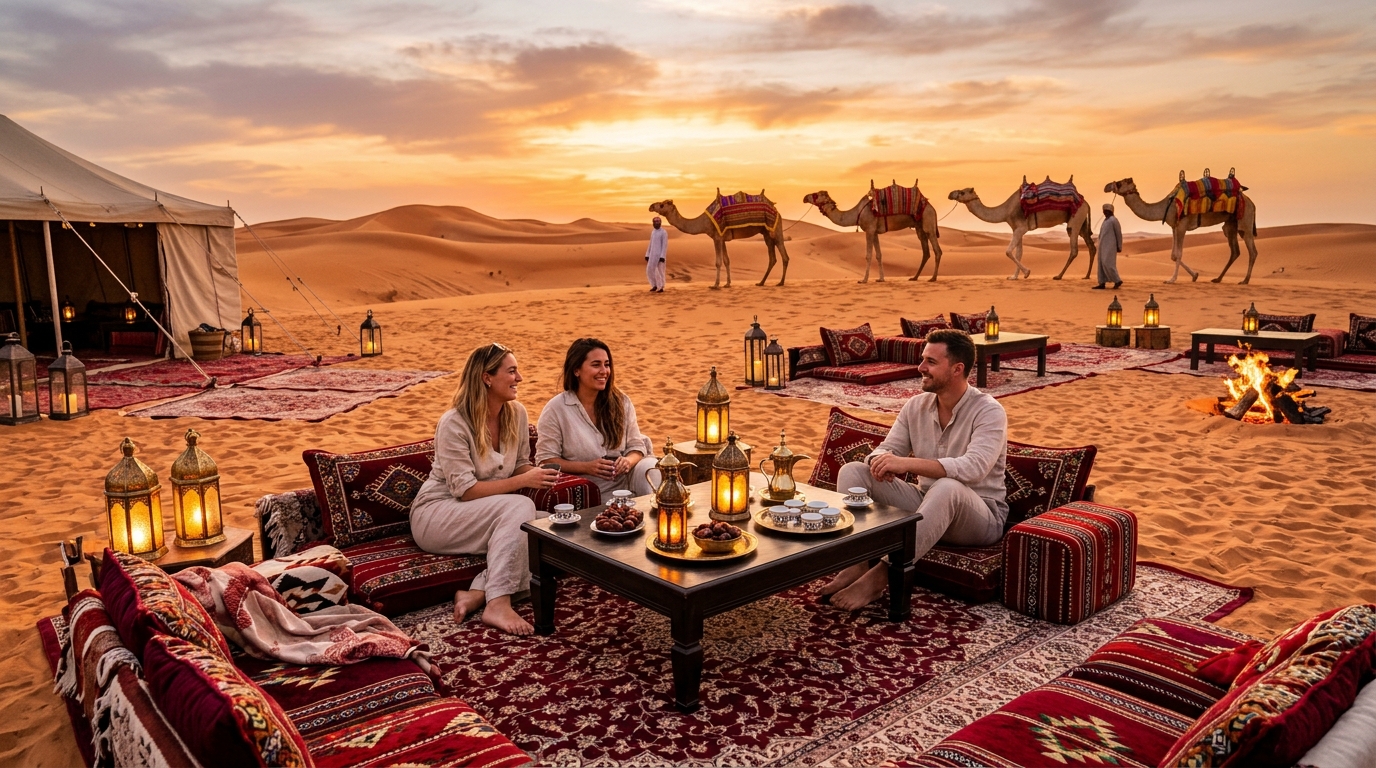
Upon concluding the off-road drive, guests arrive at a traditional Bedouin-inspired camp constructed with wooden trelliswork, palm fronds, and low majlis seating lined with authentic Al Sadu woven carpets. The camp represents the living heritage of the nomadic Bedouin tribes who navigated the Arabian Peninsula for centuries.
Traditional hospitality rituals begin immediately with the presentation of warm Arabic coffee (gahwa) brewed with green cardamom and saffron, accompanied by fresh Arabian dates and warm luqaimat (crispy honey dumplings). Within the camp perimeter, guests can participate in:
- Guided Camel Rides: Short introductory rides providing perspective on the ancient mode of desert transport.
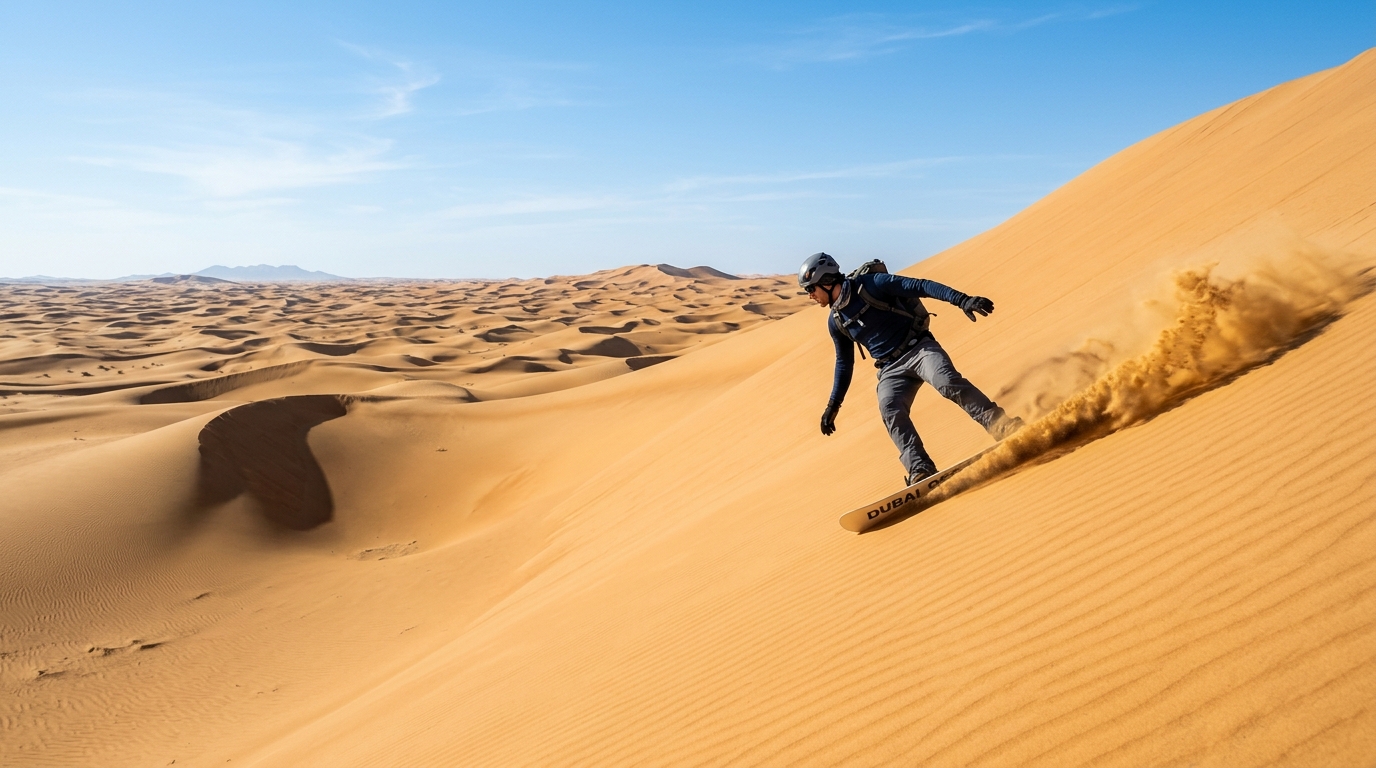
- Sandboarding: Gliding down soft dune slip faces on specially waxed boards.
- Henna Body Art: Natural botanical dye applications performed by resident female artists.
- Falcon Interaction: Learning about the historic Bedouin art of avian hunting and capturing souvenir photographs.
- Traditional Attire: Trying on traditional kanduras and abayas for commemorative portrait photography.
Dining Quality and Food Hygiene Regulations
Food service in remote desert environments is governed under stringent statutory public health legislation, principally the official Dubai Food Code (published by the Dubai Municipality Food Safety Department) and UAE Federal Law No. 10 of 2015 on Food Safety. Commercial safari camps and their central catering commissaries are integrated into Dubai Municipality's Foodwatch digital monitoring platform.
Under the Dubai Food Code's temperature control requirements for catering and temporary food service operations:
- Cold-Chain Storage: High-risk perishable foods (raw and marinated barbecue meats, poultry, dairy, and freshly prepared salads such as tabbouleh and fattoush) must be transported in temperature-controlled refrigerated vehicles and held in commercial camp chillers strictly between 1°C and 4°C prior to cooking or serving.
- Hot Holding Standards: Barbecue cuts, grilled kebabs, hot curries, and rice dishes must be held at a thermal holding temperature of at least 60°C (140°F) throughout the entire buffet service.
- Qualified Personnel: All camp food handlers must hold active Dubai Municipality Occupational Health Cards and food safety training certificates, operating under the direct on-site supervision of a certified Person in Charge (PIC). Municipal food safety inspectors conduct unannounced audits during the desert season to verify hygiene records, water potability, and Foodwatch compliance.
Dietary Preferences Accommodated
Standard safari buffets clearly separate vegetarian and non-vegetarian serving stations. All meats are certified 100% Halal. Travelers with specific allergies should inform operators during booking.
Live Cultural Entertainment
As darkness blankets the desert, the central stage comes alive with traditional artistic performances that highlight the cultural tapestry of the region. The centerpiece is the Tanoura dance, an Egyptian folk performance rooted in Sufi traditions where a male artisan spins continuously in multi-tiered, weighted, and illuminated skirts, creating mesmerizing geometric patterns without losing balance.
The evening program typically concludes with a dramatic fire manipulation show, featuring skilled performers manipulating flaming batons and chains against the dark desert sky. During religious observances such as the Holy Month of Ramadan or national mourning periods, live musical entertainment and dancing are omitted in adherence to Dubai Department of Economy and Tourism directives, while peaceful stargazing and cultural dining are maintained.
Practical Advice: Seasonality, Clothing & What to Pack
Desert weather differs significantly from coastal city conditions. While daytime temperatures in the desert remain warm year-round, radiant heat dissipates rapidly after sunset once the sand cools.
Key packing and preparation considerations:
- Winter Months (November to March): Daytime temperatures hover comfortably around 24°C to 28°C, but desert evening temperatures frequently drop to 14°C to 18°C. Bringing a light jacket, sweater, or pashmina is highly recommended.
- Summer Months (May to September): Daytime heat is intense. Evening safaris operate with air-conditioned vehicle transfers and misting fans at the camp, but lightweight, breathable cotton clothing is essential.
- Footwear: Wear closed-toe shoes or secure sports sandals. Loose sand gets hot during the afternoon and penetrates thin open footwear.
- Sun Protection: Sunglasses and broad-spectrum sunscreen are essential for the late afternoon photo stop, where sand glare is intense.
- Motion Sensitivity: Travelers prone to car sickness should eat a light meal prior to pickup and consider taking travel sickness tablets 30 minutes before the off-road segment.
Suitability, Age Parameters & Health Exclusions
Safety regulations define clear boundaries for passenger participation in high-thrill dune bashing. While the cultural camp and dining portions are suitable for guests of all ages, the off-road driving portion carries strict exclusions.
Health Exclusions:
- Pregnant Women: Commercial tour operators strictly exclude expectant mothers from the off-road dune-bashing segment due to sharp gravitational transitions and jarring movement over sand ridges.
- Infants & Toddlers: Children under 3 years of age cannot be safely restrained in standard commercial 4x4 off-road maneuvers.
- Spinal & Cardiovascular Conditions: Individuals with chronic neck or back conditions, recent major surgery, or heart ailments must avoid dune bashing.
Alternative Family Options:
Families traveling with infants, elderly relatives, or pregnant members can book a private 4x4 transfer that bypasses the high-dune bashing portion entirely, taking smooth tarmac and flat desert tracks directly to the camp to enjoy the sunset, dining, and cultural shows without physical strain.