What Quad Biking in Dubai Involves
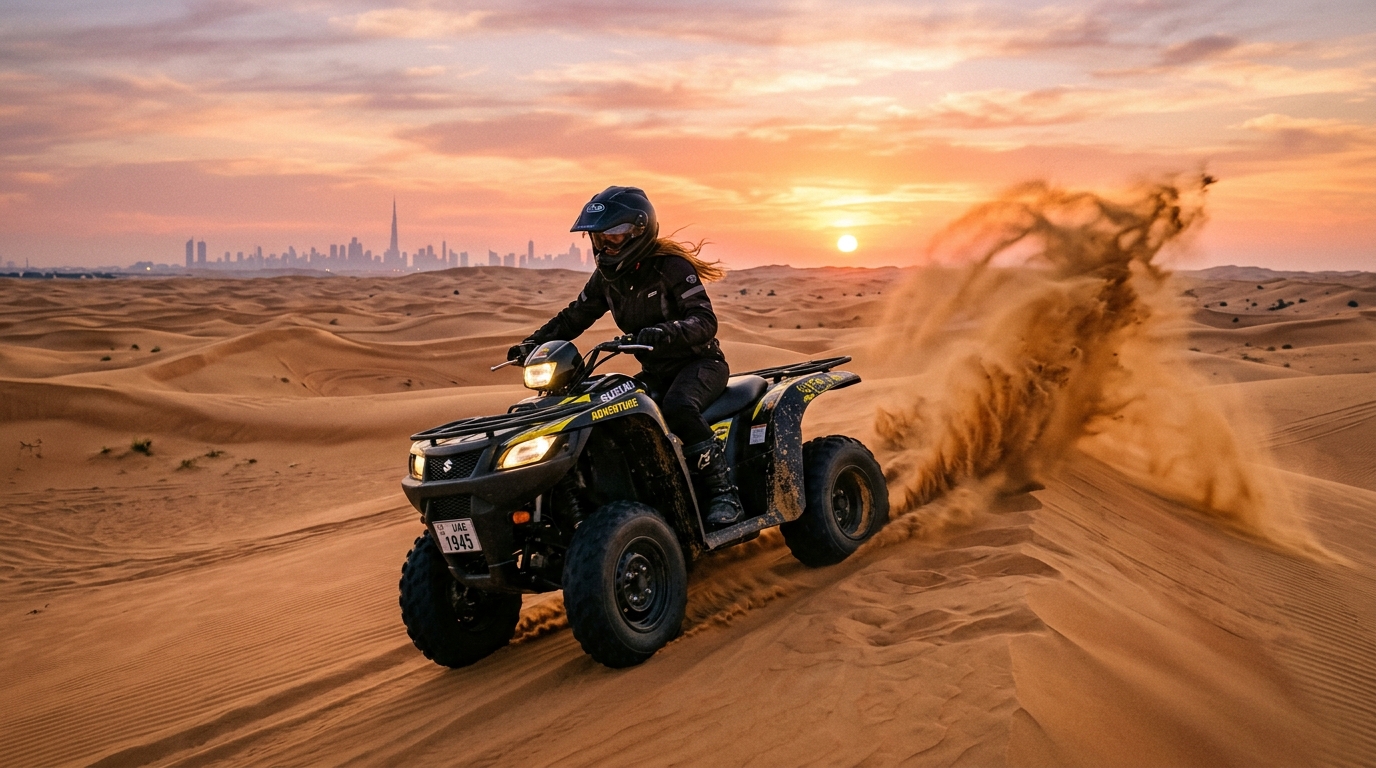
Quad biking offers visitors direct, self-directed control over off-road motorsport in the Arabian Desert. Piloting a four-wheel All-Terrain Vehicle (ATV) across rolling desert dunes demands an engaging balance of throttle control, active body weight distribution, and momentum management over loose sand.
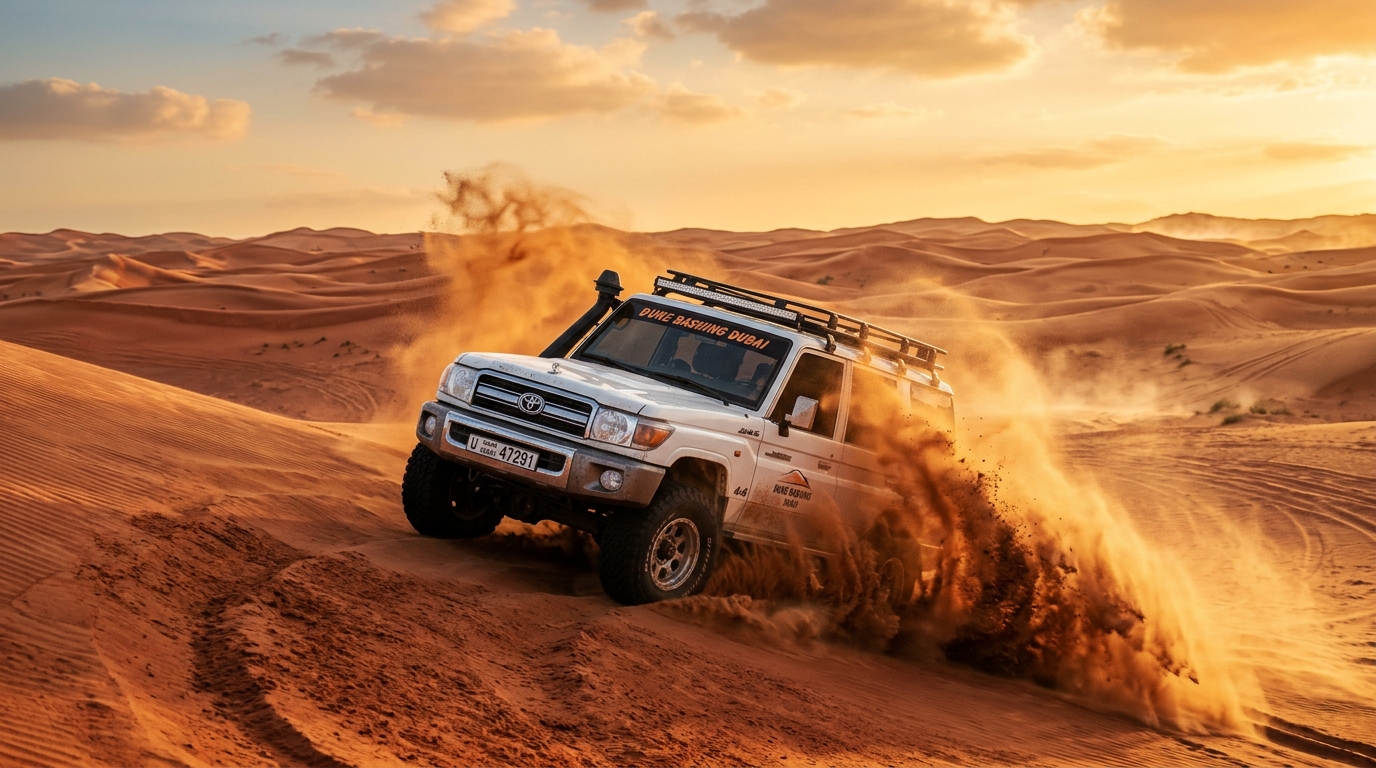
Unlike passive passenger experiences like commercial 4x4 dune bashing, quad biking places you in the driver's seat. Sessions operate on two distinct formats: enclosed perimeter tracks designed for beginners to build confidence, and guided open-dune convoys where riders follow an expert desert lead marshal across dramatic desert ridges and sand valleys.
Legal Regulations, Vehicle Classes and Age Requirements
When planning a quad biking excursion in Dubai, it is important to distinguish between statutory transport laws, vehicle power classes, and individual tour operator safety policies.
Statutory Laws:
- Dubai Regulation No. (4) of 2008 Concerning the Use and Licensing of Recreational Motorbikes and Quad Bikes and Executive Council Resolution No. (18) of 2017 establish the regulatory framework for off-road recreation.
- Public Road Ban: Under UAE Federal Traffic Law, quad bikes and recreational ATVs are strictly prohibited on all public roads, paved highways, and residential streets. Operations are legally restricted to designated private desert concessions and authorized off-road circuits.
Vehicle Classes and Operator Age Policies:
- Open High-Dune Convoys (Adult ATVs, 250cc to 700cc): Tour operators standardly require solo riders on open desert dunes to be at least 16 years of age (with a signed parent or guardian consent waiver for riders aged 16 and 17). This policy reflects the physical strength, wrist endurance, and active body weight balance needed to maneuver high-displacement machines across steep crimson slip faces.
- Youth Boundary Circuits (Youth ATVs, 90cc to 125cc): On flat, monitored boundary tracks near desert camps, many operators permit youth riders aged 12 to 15 to operate lower-displacement machines under direct staff supervision.
- Junior Enclosed Tracks (Child ATVs, 50cc to 70cc): Certain family-friendly desert camps provide speed-governed junior mini-quads for children aged 6 to 11, restricted strictly to flat, barrier-fenced boundary zones.
- Dune Buggies (UTVs / Side-by-Sides): Self-drive dune buggies (such as 1000cc Polaris RZRs) typically require drivers to be at least 18 years old, while passengers can ride with an adult driver if they fit standard multi-point safety harnesses.
Licensing Requirements:
- International visitors do not require a UAE or international car driver's license to participate, as riding takes place on private desert land outside public roadway jurisdiction. Tour operators require valid photo identification (an original passport or national ID) to complete liability and insurance registration.
Vehicle Class & Terrain Matching
Age parameters depend on the vehicle displacement and terrain. While open high dunes standardly require riders to be 16 or older, supervised flat boundary tracks accommodate younger riders from age 6 to 15 on dedicated youth-sized machines.
Quad Bikes (ATVs) vs Dune Buggies (UTVs): Key Differences
Many travelers confuse quad bikes with dune buggies. While both navigate the same desert terrain, their mechanical architecture, safety systems, and physical demands differ substantially:
1. Quad Bikes (ATVs):
- Seating: Open straddle seat (motorcycle style).
- Steering & Controls: Handlebar steering with a right-hand thumb throttle and hand/foot brake levers.
- Safety Systems: Open frame with no cabin enclosure or seatbelts. Riders must wear full protective gear and actively lean their body weight into turns and across inclines to maintain stability.
- Passenger Capacity: Primarily single-rider (solo).
2. Dune Buggies (UTVs / Side-by-Sides):
- Seating: Automotive bucket seats mounted inside an enclosed cockpit.
- Steering & Controls: Standard automotive steering wheel, foot accelerator pedal, and foot brake pedal with automatic CVT transmission.
- Safety Systems: Full tubular steel roll cage, 4-point or 5-point safety racing harnesses, and side safety nets or half-doors.
- Passenger Capacity: Available in 2-seater and 4-seater configurations, allowing non-driving companions or younger family members to experience the high dunes safely.
Top Desert Riding Locations in Dubai
The experience of quad biking is heavily influenced by desert geography and sand composition:
- Lahbab Red Dunes: Situated along the Dubai-Hatta corridor (E44), Lahbab features deep crimson sand and high slip faces. The dramatic elevation shifts provide thrilling climbing challenges for intermediate to advanced riders.
- Al Badayer (Big Red): Located on the Dubai-Sharjah desert border, this iconic natural sand formation rises approximately 100 meters above the desert floor. It is the premier hub for desert motorsport in the UAE, attracting enthusiasts from across the region.
- Al Awir & Dubai Outskirts: Gentle pale dunes closer to the city, ideal for first-time riders, youth training tracks, and short introductory sessions.
Essential Sand Riding Techniques & Safety Briefing
Riding on sand requires different reflexes than riding on paved surfaces or hard-packed dirt. Before departure, instructors provide a mandatory safety briefing covering foundational riding mechanics:
- Maintaining Forward Momentum: Sand creates rolling resistance. Hesitating or abruptly releasing the throttle halfway up a dune face will cause wheels to dig in and stall. Steady, progressive throttle application is critical.
- Active Body Shifting: On side slopes, riders must shift their body weight uphill towards the higher side of the machine to maintain a centered gravitational balance.
- Straight Cresting: Never turn a quad bike sharply sideways on a steep dune crest or slip face. Always approach dune crests perpendicular (straight up) and descend straight down.
- Safe Convoys: In guided desert expeditions, maintain at least 15 to 20 meters of following distance behind the vehicle ahead to preserve visibility through kicked-up sand.
What to Wear and What to Bring
Appropriate clothing is essential for both comfort and injury prevention:
- Footwear: Closed-toe shoes or running sneakers are mandatory. Open sandals, flip-flops, and bare feet are strictly prohibited by operators due to hot sand and moving mechanical parts.
- Clothing: Wear long, durable trousers (denim or sturdy cotton) and a long-sleeved shirt to shield skin from sun radiation, engine radiant heat, and blowing sand.
- Eye Protection: Tour operators provide protective dust goggles that seal against the face. Travelers who wear prescription glasses will find that standard goggles fit comfortably over most frames.
- Sun & Dust Protection: Apply high-SPF sunscreen to exposed neck and face areas. A traditional cotton keffiyeh (desert scarf) wrapped around the lower face provides excellent dust filtration.
Booking Formats: Standalone vs Safari Add-On
Visitors can experience quad biking in Dubai through two main commercial arrangements:
1. Safari Add-on (30-Minute Staging Stop): Most evening desert safaris pause at a desert staging hub prior to dune bashing, where guests can rent a 250cc quad bike for 30 minutes inside a marked perimeter track. This is ideal for beginners wanting a brief taste of motorsport.
2. Dedicated Self-Drive Safari Expedition: An immersive 1 to 2-hour guided off-road tour where riders venture deep into the open dunes with a professional lead marshal. These packages can include high-performance 400cc–700cc sport quads (such as Yamaha Raptor) or 1000cc Polaris RZR buggies, followed by private camp dining.